Monthly Archives

November 2012

Caging and abuse allegedly increasing in kopi luwak production

By Compassion
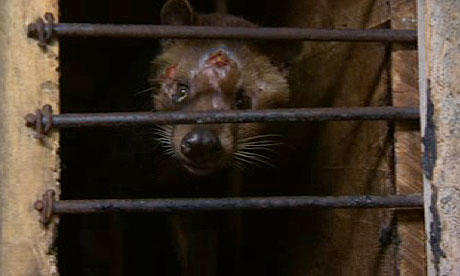
The civets are almost exclusively fed coffee berries, which they then excrete. This image was taken on a civet farm just outside Surabaya, Indonesia. (Photograph: guardian.co.uk)

The civets are almost exclusively fed coffee berries, which they then excrete. This image was taken on a civet farm just outside Surabaya, Indonesia. (Photograph: guardian.co.uk)

Producers of kopi luwak coffee, the $150-plus-per-pound Indonesian coffee harvested from the excretions of cat-like palm civets, are now in the sights of animal rights groups that are alleging abuse.

A report from the UK’s Guardian says representatives of the magazine recently visited a coffee shop in Sumatra in which an adult female civet was kept in a small back-room cage and separated from her two young offspring, while many other cages with unknown contents were kept behind the building.

Here’s more from the Guardian:

Animal welfare groups contend that growing numbers of such civet “farms” are emerging across south-east Asia, confining tens of thousands of animals to live in tiny cages and force-fed a debilitating diet. The Asian palm civet is common, but conservationists claim that related species are sometimes used which are under threat of extinction. The binturong, another cat-like species that is sometimes used to produce Kopi Luwak, is classed by the International Union for the Conservation of Nature’s red list as “vulnerable”.

Animal rights issues aside, the increase in caged civets for coffee production could also be having a negative impact on Indonesia’s place in the specialty coffee market. According to a recent Jakarta Post report, the surge in worldwide demand for kopi luwak has resulted in an increase in “farmed” beans, with more than 60 percent of the 40 to 50 tons of the coffee produced annually coming from caged animals rather than wild animals.

“The condition of the luwak affects the taste and quality of the coffee. The caged luwak are often left starving and forced to digest both the unripe green berries and the finest ripe red ones,” Wirawan Tjahjadi, owner of the Bhineka Jaya coffee company in Indonesia, recently told the paper.

[source : http://dailycoffeenews.com/2012/11/26/caging-and-abuse-allegedly-increasing-in-kopi-luwak-production/]
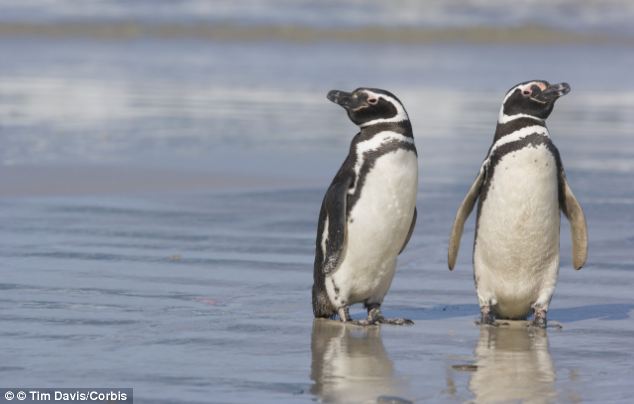
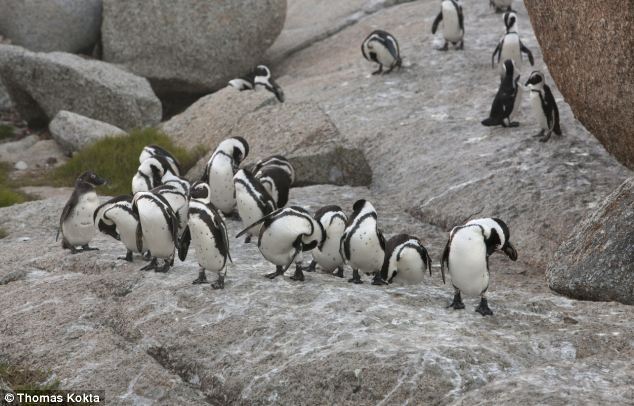
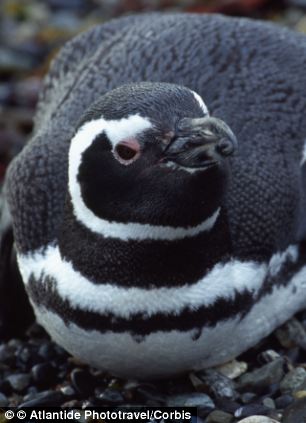
Nature’s most loyal lovers: Magellanic penguins always return to same mate after solo journeys totaling 200,000 miles

By Compassion, Wisdom
Faithful: New research shows how a pair of Magellanic penguins were loyal to each other for 16 years

Faithful: New research shows how a pair of Magellanic penguins were loyal to each other for 16 years

● Penguin couple stayed together for 16 years, smashing all previous records
● New research shows incredible loyalty in spite of the epic distances travelled by the bird

As the UK divorce rate continues to soar, a new study has today shown how marital harmony is thriving in the penguin world.

Research has revealed a pair of Magellanic penguins as among the most faithful in the animal kingdom.

The couple have remained loyal to each other over a 16-year period, in spite of spending thousands of miles apart during their winter trips.

Loyal: A pair of penguins can track each other down among hundreds of thousands of other birds using a distinctive call

Loyal: A pair of penguins can track each other down among hundreds of thousands of other birds using a distinctive call

The findings come after a 30-year study of the breed where researchers placed metal identity bands on the flippers of 50,000 birds on the southern coast of Argentina.

Previously penguin relationships were believed to span a maximum of just 10 years, with many cut short by the unexpected death of birds during migration.

Loving: A Magellanic penguin stays loyal to the same mate, in spite of long periods apart

Loving: A Magellanic penguin stays loyal to the same mate, in spite of long periods apart

‘Divorce’ is also a possibility as couples who fail to hatch chicks will split up and find new mates.

But according to The Sunday Telegraph, biologists have been surprised by the longevity of the relationship between a particular couple.

‘The bond they have is incredible really,’ lead researcher Dr Pablo Garcia Borboroglu, of the National Research Council of Argentina, told the newspaper.

‘It is unbelievable how far Magellanic penguins swim – and each breeding season they come back to the same nest and to the same partner.’

The research was revealed during a lecture to the Whitley Fund for Nature in London, and Dr Borboroglu will set out his findings in a book to be published next year called Penguins: Natural History and Conservation.

Magellanic penguins can only be found around the Falkland Islands and South America.
Argentina has the highest population, with 900,000 breeding pairs in Argentina, while there are 800,000 couples in Chile.

But their numbers have dropped dramatically since the turn of the century due to oil pollution and falling fish numbers and there are thought to be around 1.2 million left in the world.

Dr Borboroglu’s project also used satellite tracking to identify the movements of the birds, showing the enormous journeys they travel each winter to the warmer waters of Brazil.

Every year, the penguins arrive at their summer nests in the southern hemisphere and find their partners using a distinctive call.

After reuniting and mating, the female usually lay two eggs, which each partner takes turns guarding while the other goes out to sea.

After they hatch, the parents spend a month caring for their young before heading off to their wintering area.

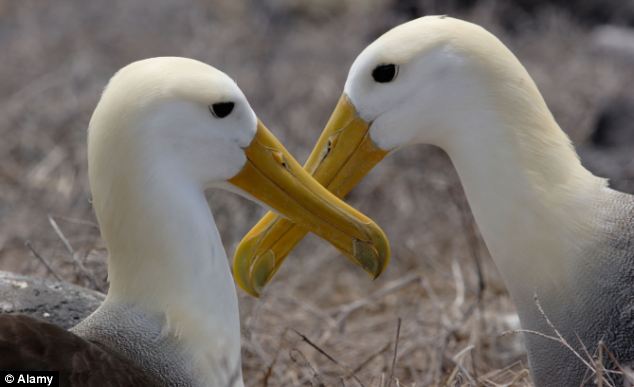
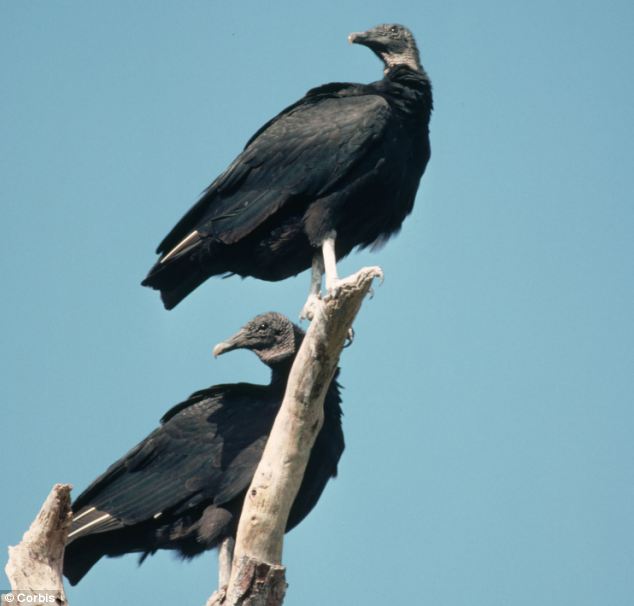
The penguins join a roll call of other animals that undertake loyal relationships, including the albatross, French angelfish and black vultures.

Mates for life: In spite of long distance flights, albatrosses always return to breed with the same partners

Mates for life: In spite of long distance flights, albatrosses always return to breed with the same partners

Jealous: Like the Magellanic penguin, black vultures are strictly monogamous

Jealous: Like the Magellanic penguin, black vultures are strictly monogamous

[source : http://www.dailymail.co.uk/sciencetech/article-2234755/Magellanic-penguins-return-mate-solo-journeys-totalling-200-000-miles.html]

Free to roam: Female elephant fitted with a new prosthetic leg

By Compassion
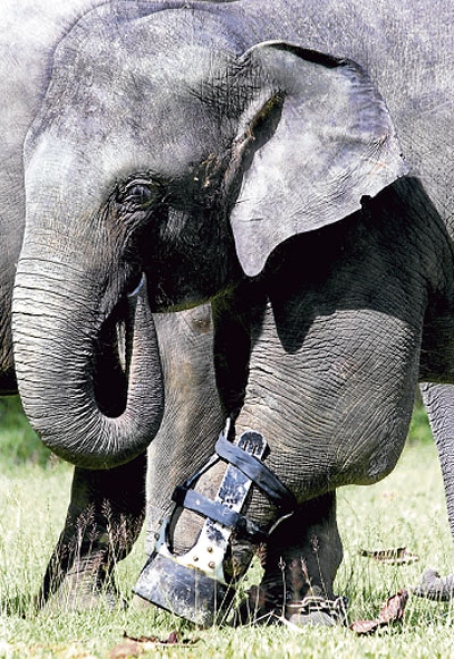
Seledang using its prosthetic leg at the Kuala Gandah National Elephant Conservation Centre in Temerloh yesterday. (Pic by Mohd Rafi Mamat)

Seledang using its prosthetic leg at the Kuala Gandah National Elephant Conservation Centre in Temerloh yesterday. (Pic by Mohd Rafi Mamat)

TEMERLOH: A company’s kind act in providing a prosthetic limb for female elephant Seledang has enabled the animal to roam freely again within the gated area of the Kuala Gandah National Elephant Conservation Centre, here.

The 7-year-old’s left foreleg was severed at the ankle after it was caught in a wire mesh, here, a year ago. It was discovered by a plantation worker, who alerted the Department of Wildlife and National Parks (Perhilitan).

Head of Kuala Gandah National Elephant Conservation Centre Nasharudin Othman said they had fitted Seledang with a prosthetic leg but after more than a year, it was found to be unsuitable. He said Seledang’s leg had grown bigger and a more comfortable artificial limb was needed.

Nasharudin said the company, an international shoe manufacturer based in Kuala Lumpur, had offered the help as part of its corporate social responsibility programme. He said the company had helped Perhilitan save the cost of buying a new prosthetic leg, which cost more than RM20,000.

He said the company would examine Seledang’s prosthetic leg soon to make minor adjustments.

“After wearing the prosthetic leg for a few weeks, Seledang kept dislodging it as it was uncomfortable.

“The company said it would examine Seledang’s artificial leg to make the necessary changes.”

Nasharudin said it was the first time a local elephant had been fitted with a prosthetic leg as compared with Thailand and Myanmar, where the use of prosthetic legs among elephants was common because of accidents.

Seledang is one of 10 elephants, aged between 1 and 7, under the Kuala Gandah National Elephant Conservation Centre’s young elephant management programme, which is supported by Perhilitan. It is aimed at protecting animals that are separated from their herd.

“Sometimes, they are found stranded in forests or oil palm plantations in Pahang, Perak and Terengganu,” Nasharudin said.

Under the programme, the young elephants are fed twice a day and allowed to roam for three to four hours within the 1ha electric-gated area, under the close monitoring of Perhilitan staff.

When the animals reach the age of 4 or 5, they are released into the forests, either in groups or pairs.

“Since the Kuala Gandah centre was set up in 1985, we have released six adult elephants into Taman Negara’s forest reserve,” said Nasharudin. “This is important as it allows the animals to live in their natural habitat.”

[source : http://www.nst.com.my/nation/general/seledang-on-its-feet-again-1.163898]