Tag

temple Archives - juesatta (CJ Photography)

Let’s go Cambodia – Angkor Wat

By My journey, Photography
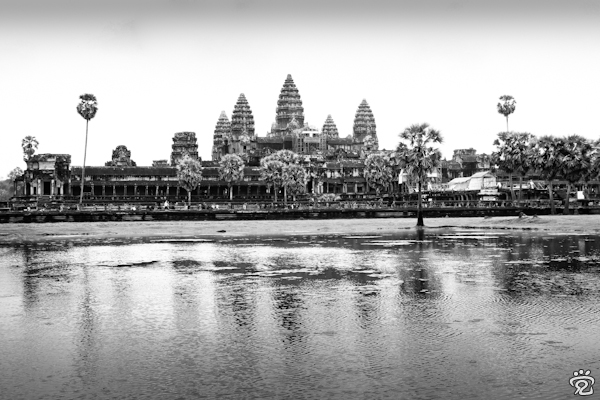
black and white Angkor Wat

black and white Angkor Wat

After Ta Prohm Temple, we headed to the symbol of Cambodia, Angkor Wat. The daily pass we purchased before granted us the access Angkor Wat, checked by security certainly. Most people will have heard of the famous Angkor Wat, in fact it is only one of the many buildings of an ancient civilization.

Some background of Angkor Wat,

Angkor Wat is a temple complex at Angkor, Cambodia, built for the king Suryavarman II in the early 12th century as his state temple and capital city. As the best-preserved temple at the site, it is the only one to have remained a significant religious centre since its foundation – first Hindu, dedicated to the god Vishnu, then Buddhist. It is the world’s largest religious building.

The temple is at the top of the high classical style of Khmer architecture. It has become a symbol of Cambodia, appearing on its national flag, and it is the country’s prime attraction for visitors.

Angkor Wat combines two basic plans of Khmer temple architecture: the temple mountain and the later galleried temple, based on early South Indian Hindu architecture, with key features such as the Jagati. It is designed to represent Mount Meru, home of the devas in Hindu mythology: within a moat and an outer wall 3.6 kilometres long are three rectangular galleries, each raised above the next. At the centre of the temple stands a quincunx of towers.

Unlike most Angkorian temples, Angkor Wat is oriented to the west; scholars are divided as to the significance of this. The temple is admired for the grandeur and harmony of the architecture, its extensive bas-reliefs and for the numerous devatas (guardian spirits) adorning its walls.

The modern name, Angkor Wat, means “City Temple”; Angkor is a vernacular form of the word nokor which comes from the Sanskrit word nagara meaning capital or city. Wat is the Khmer word for temple. Prior to this time the temple was known as Preah Pisnulok, after the posthumous title of its founder, Suryavarman II.
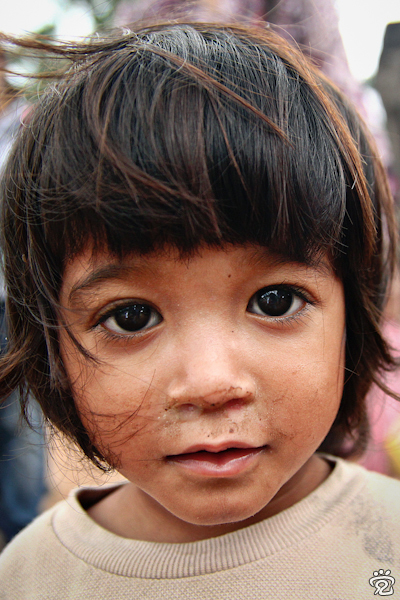
innocent kid at the entrance of Angkor Wat

innocent kid at the entrance of Angkor Wat

Back to our journey.

Everyone was excited at the entrance of Angkor Wat when we saw Angkor Wat through the windows of the bus. As soon as the bus stopped, we jumped off the bus and rushed to the entrance. Many children approached us and trying to sell us some stuff such as souvenirs, food, books etc.

It was noon and Angkor Wat was so crowded with foreigners and even locals. We would have tens of people blocking the view everywhere we tried take photos. Nevertheless, it was alright for me because I wished to snap photos of unique and interesting people.

From the entrance, there is a long causeway connects to the gate of the temple. I took a long walk over the huge water reservoir and moat surrounding Angkor Wat and reached the gate.

There were a few couples wearing traditional Khmer wedding costumes and had their wedding photos taken with the magnificent background. This is probably a good place for couples to have their wedding albums beautifully done.

There I started to take shots of the interesting people, including wedding couples, and an old man who seemed like a fortune teller, and monks who were not as many as I expected. Then I set my way towards the temple it had take a long walk again from the gate to the main temple. On my way before reaching the doorstep of the main temple, I met many adorable children and again I had their photos captured.

Standing in front of the main temple, whole place just looked amazing. However the weather on the day was not that good. It was windy and some drizzling. The best time to go to Angkor Wat would be dawn when the sun is rising from the back of the temple, and when the weather is fine and calm. In that case, we would probably get a perfect silhouette of Angkor Wat stands against the orangish sky while its reflection is mirrored in similarly beautiful orangish water. Unfortunately, it didn’t happen that way.

As I continued walking towards the central complex, I found many statues and many of those were headless, due to pillaging and looting. Making my way through the passageway and steps to the central complex, I snapped photos of many wall-carving which are similar to those in Ta Prohm Temple, such as the devatas (minor female deities). Surprisingly many of the bas-reliefs had well stood through the test of time and remained beautiful, despite centuries of wear and tear and invasions from tourists and looters.
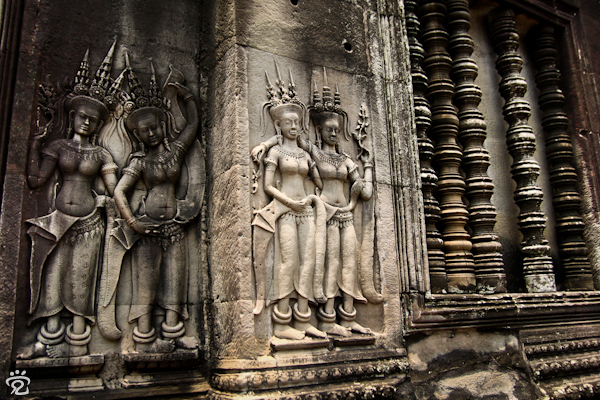
bas-reliefs everywhere

bas-reliefs everywhere

After minutes of walk, I found my myself to be at the central complex, where I could see the lotus-like-towers. The steps to the top of the towers are small steps, less than half of my foot, and steep, the height of each step is longer than its tread. I decided to climb up the tower to have a better view of the whole compound, but time was running out. We were given only 45 minutes to tour Angkor Wat which I only had couples of minutes left when I reach the the central complex. I knew it would take some times to walk out the temple and I had leave then.

I took a few last shots of the locals praying there and quickly made my way to the bus. Forty-five minutes would never be enough for Angkor Wat. Not to mention people who want to know every piece of its stories and take wonderful photos. It would be worthy to spend at least 3 days in Siem Reap and visit temples of Angkor numerous times and different times of the day.
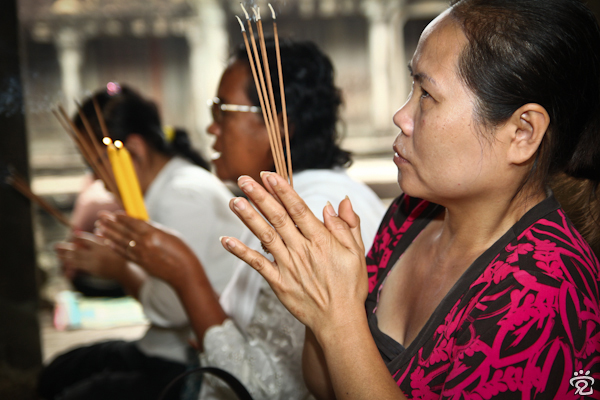
locals praying for blessing

locals praying for blessing

Our exploration to Siem Reap was such a short time, half a day to visit the town, Ta Prohm Temple and Angkor Wat. However, we were glad we made it and hope to see the place again. I believe there will be surprises each time we go back.

So there we were, and continued the trip to the capital city of Cambodia, Phnom Penh in a long bus journey. Goodbye, Siem Reap!

Sharing more shots after the click. May all beings be happy.
Read More

Let’s go Cambodia – Ta Prohm Temple

By My journey, Photography
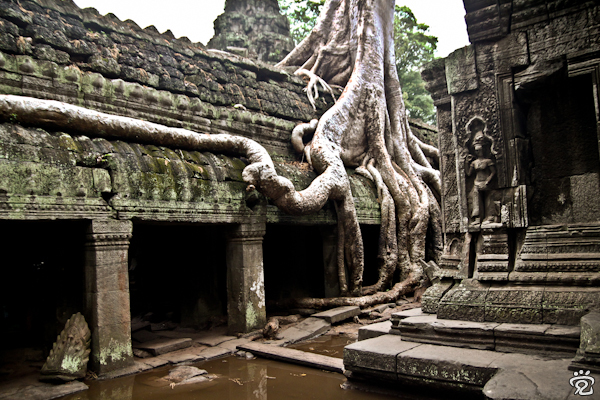
trees growing on Ta Prohm Temple

trees growing on Ta Prohm Temple

First thing we did after arriving in Siem Reap and had our breakfast in town was to go to Ta Prohm Temple, which known for the trees growing on it, and that Tomb Raider by Angelina Jolie was filmed at. We have to thank Miss Chong from our trip who made the arrangement to Ta Prohm Temple and Angkor Wat, which initially were not included in the tour. We are glad that we were able to make out there, as a trip to Cambodia without Angkor Wat would be disappointing.

visitors making their way through the jungle the the temple

visitors making their way through the jungle the the temple

It took about 30 minutes bus ride from town to Angkor. Before we entered the area, we stopped at the ticket booth. Each of us had to have our individual photo taken and printed on the pass. This procedure is to avoid people from sharing or transferring their passes.

The passes we purchased got us access to all of the Angkor temples and they were not exactly cheap, however they were worth it. After gotten our passes, we proceeded to first destination, Ta Prohm Temple.

A brief history of Ta Prohm Temple from the web,

Ta Prohm is the modern name of a temple at Angkor, Siem Reap Province, Cambodia, built in the Bayon style largely in the late 12th and early 13th centuries and originally called Rajavihara. Located approximately one kilometre east of Angkor Thom and on the southern edge of the East Baray, it was founded by the Khmer King Jayavarman VII as a Mahayana Buddhist monastery and university.

Unlike most Angkorian temples, Ta Prohm has been left in much the same condition in which it was found: the photogenic and atmospheric combination of trees growing out of the ruins and the jungle surroundings have made it one of Angkor’s most popular temples with visitors.

The temple of Ta Prohm was used as a location in the film Tomb Raider. Although the film took visual liberties with other Angkorian temples, its scenes of Ta Prohm were quite faithful to the temple’s actual appearance, and made use of its eerie qualities.

Ta Prohm is the only temple that has not been restored, but left just as it was found. The courtyards, walls and roofs of Ta Prohm have been repaired to prevent further deterioration and the inner area has been unclogged of dense bush and jungle vegetation.

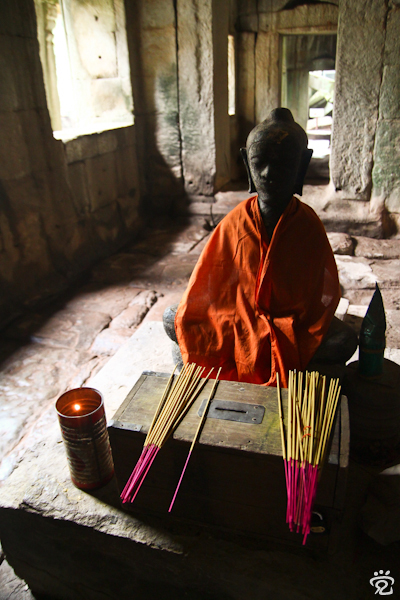
serene Buddha statue

serene Buddha statue

Our guide told us that we had only 45 minutes to visit Ta Prohm Temple because we had to visit Angkor Wat then Phnom Penh. We knew it was insufficient to explore the whole temple in that time frame, therefore we had to take a cook’s tour.

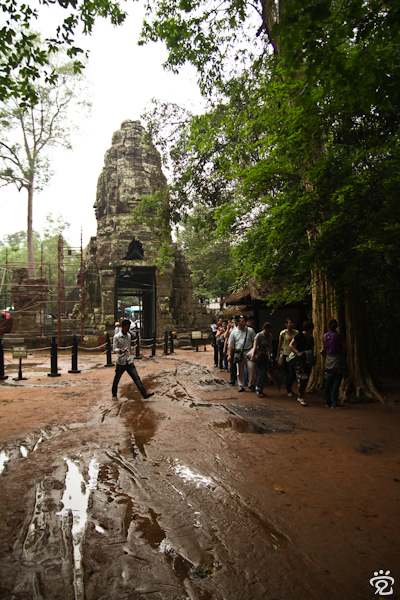
Bus stopped in front of Ta Prohm Temple with Buddha face tower as the gate entrance. That morning, the place was crowded with visitors.

When walking from the gate to the temple, we went into the jungle through a slippery muddy walkway after a rain. We saw some landmine victims’ music instruments performance and raised landmine awareness on our way. We took a few shots and quickly headed to the temple not far from the front.

Arrived at the front the temple, we were like wow, we were finally here at the Tomb Raider Temple, old and magical temple! The outlook of the whole temple was magnificent and we were wondering how people could build such a place centuries ago.

We entered the temple separately and each of us made our own exploration of the place.

As I walked inside, I saw more temple ruins and wall-carving, featuring stone reliefs of devatas (minor female deities), meditating monks or ascetics, and dvarapalas or temple guardians. However, parts of the structure had collapsed and some part of the ruins were close for repair work.

The temple is famous of overrun by very large and old trees. I saw tree roots that engulf the structures were very interesting to behold.

Soon as I was taking shots of the large tree, I noticed that visitors around were unfamiliar faces. I knew time was up and most friends had hopped back into the bus.

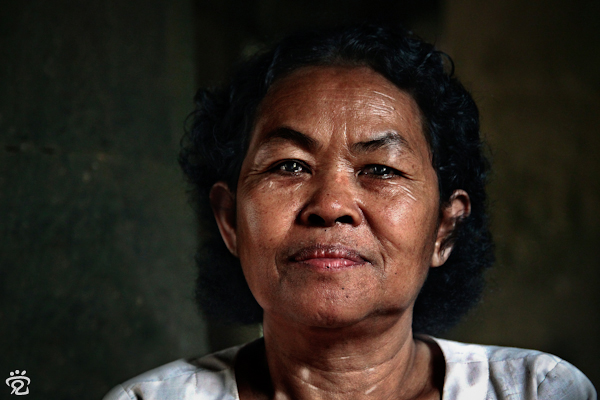
I made my way out of the temple unreluctantly and just before I left the temple, I met an old Khmer lady sitting in the ruins offering blessing and incense for burning. First thought came into my mind was to take her portrait shot. Having her consent, I took the first portrait of a Cambodian, which turned out to be one of my collection of Cambodian faces. I started to seek for unique faces from this trip.

old lady at Ta Prohm

old lady at Ta Prohm

I was the last to get into the bus yet was in time. We then departed to Angkor Wat.

45 minutes was just too short to tour Ta Prohm especially for people who want to explore and snap photos. Knowing that early morning is the best time to visit Ta Prohm: less visitors and dawn mystical atmosphere will intensify the experience, I just know that I have to be there again!

May all beings be happy. Sharing some shots which I took after the jump:

Read More

Lover Bridge in Segenting

By My journey, Photography
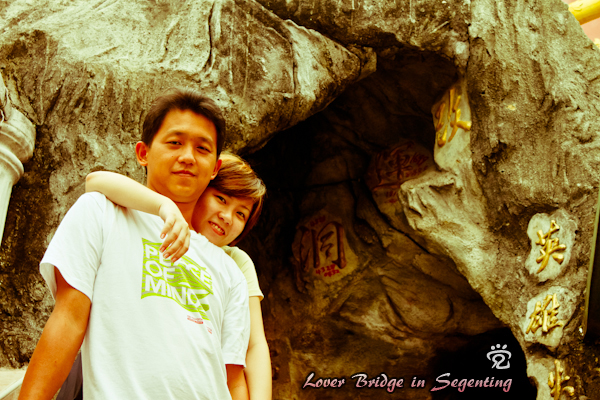
the happy couples, Kok-Liang and Tracy at the Chong Long Temple

the happy couples, Kok-Liang and Tracy at the Chong Long Temple

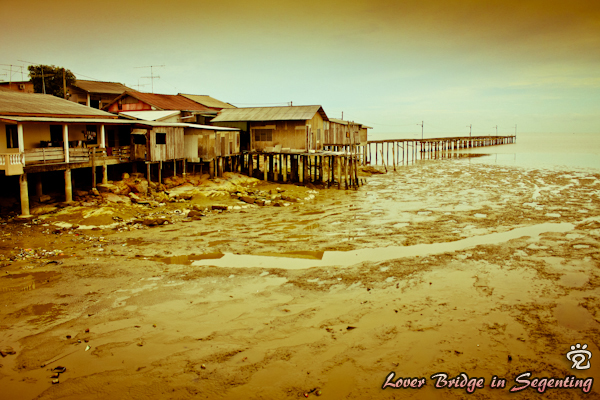
Segenting is a beautiful fishing village not far from Batu Pahat. Here, the residents built their homes at the edge of the sea which supported by stilts to brave the high tides. There are a lot of temples in this fishing village. As most of the residents are fishermen, they pray to the Deities for a good harvest. One of the well-known temples would be the fish-touching Chong Long Temple which I came in April with friends. After sharing the trip of fish touching, my friend, Tracy was so interested to go for fish touching and requested to visit Segenting village for the first time. So we’d decided to go again.

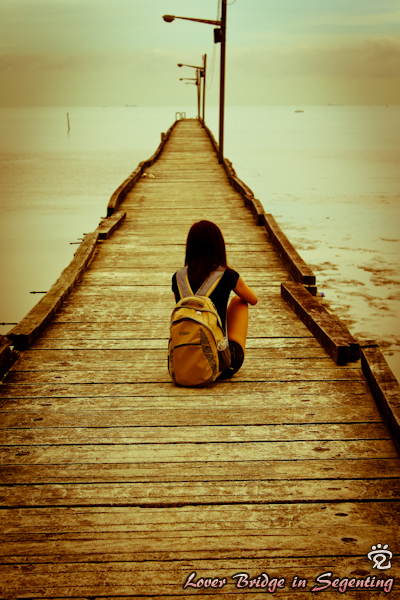
Cinda at the Lover Bridge, waiting for inspiration for photography

Cinda at the Lover Bridge, waiting for inspiration for photography

It was a Saturday early morning last August. Tracy and partner, Kok-Liang together with Cinda, Wee-Peng and I traveled to Segenting village. When we arrived the weather was cloudy and after paying respect to the Deities at the Chong Long Temple, we went for fish-touching. This time I managed to capture the shots of the huge Arapaima fishes on the upper level of the temple. These two fishes were larger in size (exceed 2 meters) and their bright red patterning were distinctive than the rest found on the ground level’s pond. There were many visitors there trying to touch these fishes in the belief that it could bring good luck.

Short after we toured around the temple, we headed to the Lover Bridge (情人桥), which is actually a jetty. It is not far and could be seen from the temple. I missed the chance to visit to this bridge due to the rain and ever since my last visit, I was always wanted to visit the bridge. I knew I would be back. Eventually we were standing on this long jetty, built of rows of plank supported by stilts. The scenery was beautiful and the feel was good with the breeze.

The lover bridge used to be a docking and undocking platform for the fishermen however it is now romantic spot for dating couples. Many couples date here and that is probably how it got its name. Some locals believe that after a guy and a girl take a walk on the bridge, they would fall in love and become couples. Another adverse version which I heard would be its curse: if couples walk through the bridge, they will soon break up. Whichever is true, it is still a nice spot to enjoy a pleasant walk and sight for beautiful sunset.

the Lover Bridge of Segenting, sighted from the Chong Long Temple

the Lover Bridge of Segenting, sighted from the Chong Long Temple

It was a pleasing out of town trip together with good friends. Thanks to Tracy, Kok-Liang, Cinda and Wee-Peng for taking me to this great place and being my company. I hope we have the chance to go again and stay longer to tour around the village next time for photo-shooting.

May all beings be happy. More shots of fish-touching and the Lover Bridge after the jump:

Read More

Bangkok: Wats, the temples

By My journey, Photography

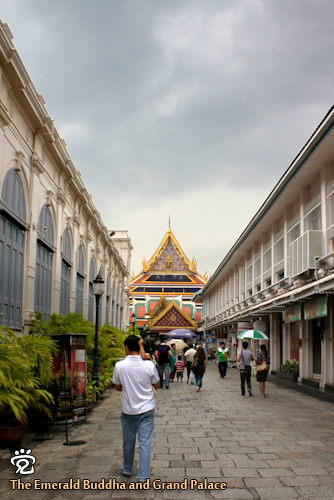
Gate to the Grand Palace

Being the capital city of a Buddhist country means that Bangkok is full of some of South East Asia’s finest temples. Therefore our visit to Bangkok would not be complete without seeing some of these famous temples (Wats in Thai). On the second day and fourth day in Bangkok, we visited a couples of temples:

  • Wat Traimit (Temple of Golden Buddha)
  • the unknown temple (we got blessing from a Luang Pu monk)
  • Wat Phra Kaew and Grand Palace (The Emerald Buddha)
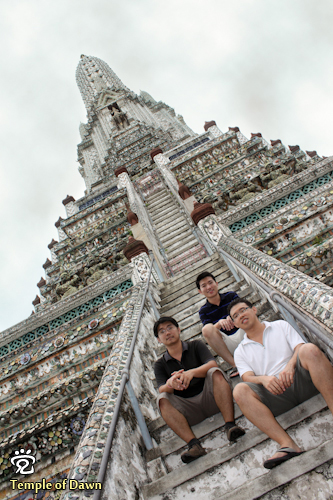
  • Wat Arun (Temple of Dawn)
  • Wat Pho (Temple of Reclining Buddha)

Boon-Huat, Wei-Seong and Wee-Peng at the steep stair of Wat Arun's central prang

These temples we visited are the spiritual part of the capital’s heart and soul and each of the temples is unique like no other as the architecture and decoration are awe-inspiring. It would be good to share the story of each temple together with the photos I took after the jump:

Read More