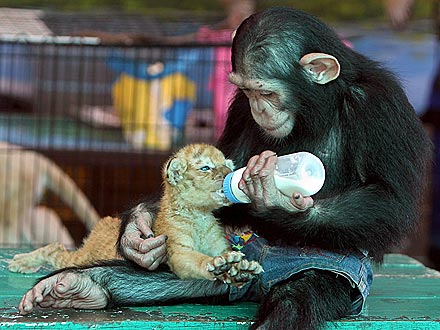
Chimp lovingly feeds tiger cub with baby bottle (1/2)
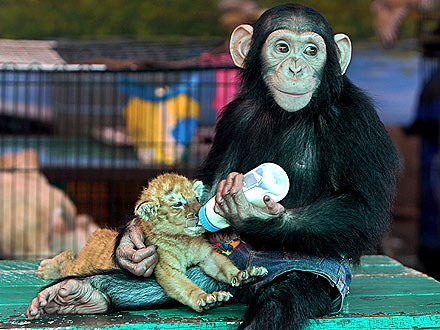
Chimp lovingly feeds tiger cub with baby bottle (2/2)
There’s a good tiger cub, take a little more milk …
This sweet scene played out at the Samut Prakan Crocodile Farm and Zoo in Thailand, where a chimpanzee helped bottle-feed a 28-day-old tiger cub.
As the young golden tiger got its fill, the chimp patiently held the bottle of milk, often nesting a hand under the cub’s chin. Interspecies love – always adorable!
Chinese-Malaysian cover model and actor Amber Chia (The 3rd Generation, Trio & a Bed) earned her stripes as a friend to animals who are imprisoned in zoos by starring in an eye-catching PETA anti-captivity ad in which the fresh-faced beauty—who has graced the pages of Harper’s Bazaar, FHM, Playboy, and NuYou—poses wearing only painted tiger stripes to bring in the Year of the Tiger. “Tigers, elephants, and chimpanzees aren’t meant to live fenced in any more than I am,” Chia explains. “The born free should stay free.”
Animals in zoos are sentenced to a lifetime of boredom, loneliness, and abuse. Even the biggest zoos cannot provide the space, exercise, privacy, or mental stimulation that the animals they imprison need, much less fulfill animals’ other complex needs. As a result of their confinement, animals in zoos frequently exhibit neurotic behavior such as constant pacing, head-swaying, and circling. In response to their never-ending frustration, some even resort to self-mutilation and other abnormal and self-destructive behavior.
Make It a Good Year for Tigers! Help Animals in Zoos
Stay away from zoos and animal displays, and encourage other people to do the same. Take our pledge to boycott zoos, and promise never to support any business that profits from the confinement of animals.
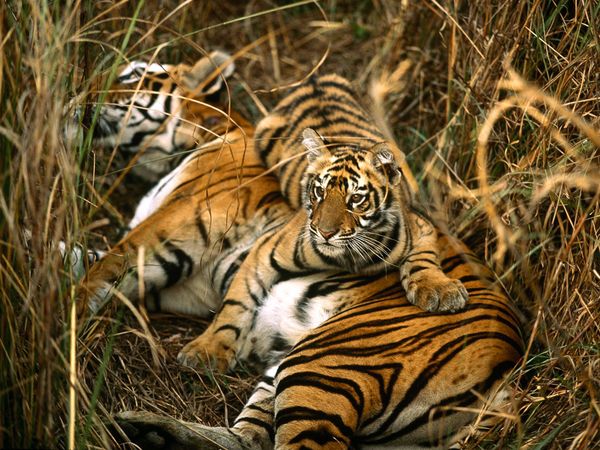
A mother Bengal tiger and her cub rest in the tall grass of a meadow. Tiger cubs remain with their mothers for two to three years before dispersing to find their own territory. Photography by Michael Nichols
The tiger, one of the most magnificent animals in the world, is also one of the most endangered. A cat of beauty, strength, and majesty, the tiger is master of all and subject to none — except humans. Of the eight original subspecies of tigers, three have become extinct within the last 60 years; and there are less than 50 South China tigers left on this planet — few, and possibly none, survive in the wild.
There are five different kinds or subspecies of tiger alive in the world today. These tigers are called Siberian, South China, Indochinese, Bengal, and Sumatran. Their Latin name is Panthera tigris. Tigers are an endangered species; only about 5,000 to 7,400 tigers are left in the wild. Three tiger subspecies, the Bali, Javan, and Caspian tigers have become extinct in the past 70 years.
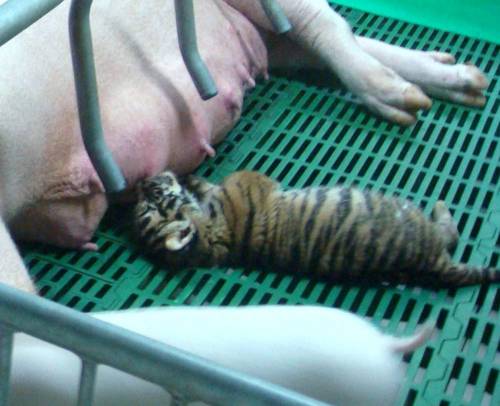
Poachers are continuing to exterminate the world’s remaining Tigers. New demand across Southeast Asia for the skins, teeth and claws of tigers is endangering much of the great cats, particularly the Sumatran tiger. Currently, the demand for Tiger parts is centered in several parts of Asia where there is a strong market for traditional medicines made from items like tiger bone and body parts. Volumes are sizeable and there has been little enforcement action against poachers and traders.
Hi! I am CJ, blogger of Juesatta and photographer of CJ Photography.
I love and enjoy photography, thus make me a lifestyle wedding photojournalist and portrait photographer based in Melaka, a lovely town full of history and characters in Malaysia.
Wedding is the sweetest thing of one’s life because it celebrates love, therefore I have always been passionate for capturing beautiful, natural and romantic wedding day images of moments for couples to be cherished a lifetime.
Drop me an email cj@cjfen.com and will be great to hear from you!