Monthly Archives

June 2011

大马‧以天为被地为床

By Beautiful Melaka


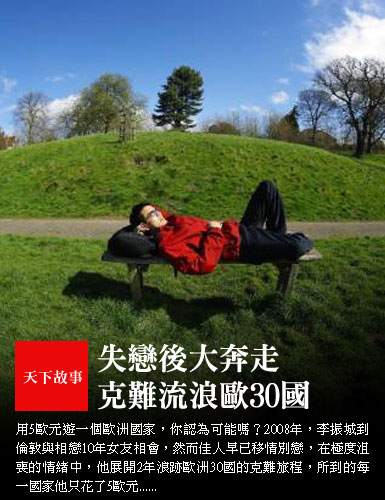
(马来西亚)用5欧元游一个欧洲国家,你认为可能吗?李振城说他就做到。

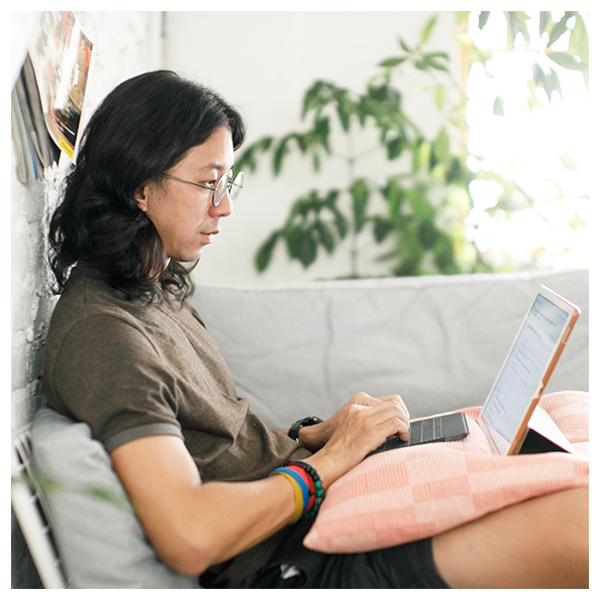
很多人所认识的李振城,是一个开朗的阳光青年,也是马六甲老街两间民宿的老闆。

令人意外的是,这个表面随和、整洁的大男孩,在半年多以前却是个不折不扣的流浪汉,在欧洲各地跟街头露宿者和鸽子同眠,甚至两三个星期冲一次凉。

以每个国家只花5欧元的预算,李振城走过欧洲30个国家。

被驱赶被打抢几乎冻死

以地狱的方式流浪的同时,李振城却体会到什么是天堂。

“吵架、打架、被骚扰、被驱赶、被打抢、差点被冻死,是旅游中的家常便饭;在苦难之中遇到善心人,我发现天使就在身边。”

在盲目放任的流浪之中,李振城却感受到“地球与我同在”的自由与亲密。从此他更爱地球。

“有时没有目的地搭火车走到尽头,到达一个不知名的无人地方,却赫然发现地球就在脚下,天地无限辽阔。”

从一开始的极度沮丧、完全放弃,李振城找到小小的自己与宽阔的天地。

年轻人没真正经历过苦

“人生应该趁年轻至少疯狂一次。但不鼓励像我这样的方式,其实真的太危险。”

他发现现在的年轻人很响往旅行,其实却是非常“草莓似”的脆弱。他担心这些备受保护的年轻人日后出来社会如何面对种种的问题和挑战,如何成为社会国家的栋樑。

他相信,这也许是现今很多年轻人,动不动就因为功课、爱情等离家出走或自杀的原因,因为他们没有真正经历过什么是苦,什么是一无所有。

“当你可以放弃一切的时候,你反而更有生存能力。”李振城的故事太丰富,以下只是其中精彩的一小部份。

失恋后开始流浪两年

2008年6月,李振城去伦敦找相恋10年的女友,却发现女友移情别恋。在极度沮丧之中,李振城用间歇打工的钱,开始漫无目的在欧洲流浪两年,直到生了一场大病,再走不下去才决定回家。

大病不死回到马六甲,半年来开了两间极受欢迎的民宿,李振城把当年自己旅途中曾经最急切的需要――住、吃、玩,变成为他开民宿的贴心点。

“我现在常常会收留找不到住宿的背包客睡在客厅。我希望人人有床位,人人都可以睡。”

Read More

Let’s go Cambodia – our way to Phnom Penh

By My journey, Photography
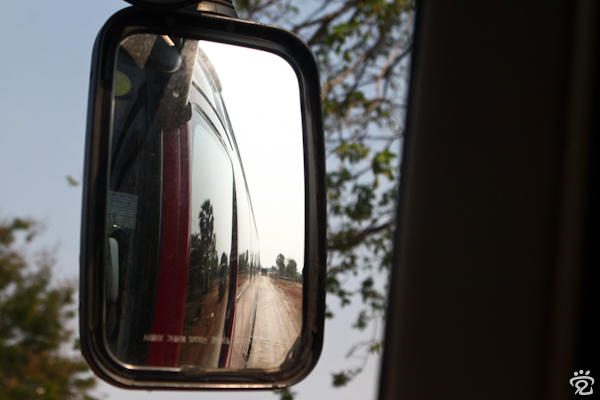
bus journey from Siem Reap to Phnom Penh

bus journey from Siem Reap to Phnom Penh

After we left Angkor temples, we took a 7-hour bus to Phnom Penh, the capital of Cambodia. I was leaning on the seat, looking at the scenes from the bus windows that I had never seen in real life. The extremely poor villages and living. The journey was eye-opening.

We traveled on a gravel road by bus. There were shacks built on wooden stilts off the ground beside the road we traveled, for clearing the floods of the next monsoon. These shacks mostly built facing the road, with the backyards used for agriculture.

We took a look daily life of the villagers on our way: most of the villagers farm the land or fish to obtain their food, and they live with minimal or without electricity, safe drinking water or any other support. So the place was totally dark at night, with only lights of vehicles on the road visible. What amazed us was the sardine like quality of transportation, vehicles such as motorbike, car or truck was overloaded with passengers or goods.

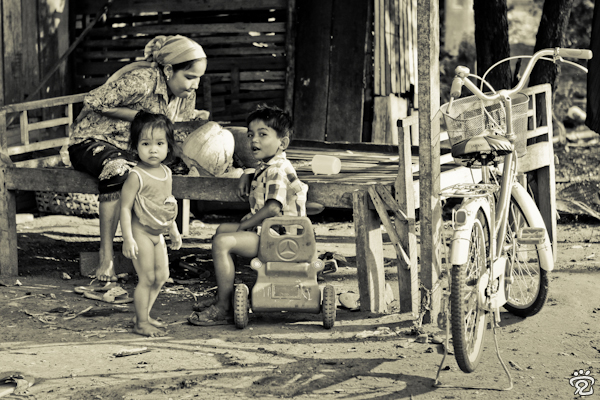
On the half of our journey, about 4-5pm in the afternoon, we stopped at a village for some fresh air. I don’t even know the name of the place, yet without wasting the few minutes I’d got, I quickly took some shots of the people living there. They seemed to us like strangers.

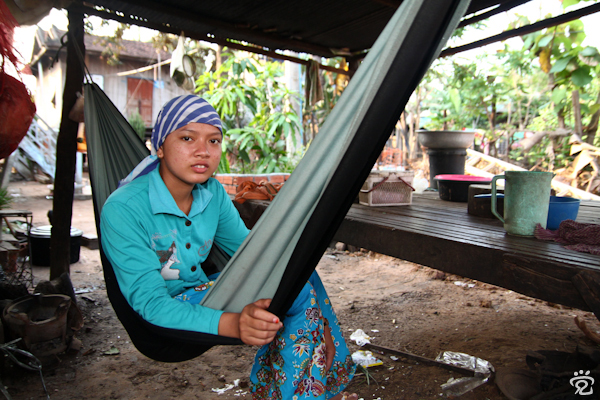
Most of us would never experience life like the Khmer villagers. Such living conditions gave us the impression of a poor and an unhappy life, many of the villagers however seemed contented and happy with their life: kids running wildly, women relaxing in hammocks, men having drinks and chit chat together. This situation reminded me of an old Chinese story:

When Chuang-Tzu (an influential Chinese philosopher who lived around the 4th century BCE) was talking with a friend about some fish in a pond.

He said, “Look at those minnows darting here and there. How free and pleasurable is the life of a fish.

His friend pointed out to him, “You are not a fish – how do you know that their life is free and pleasurable?” – in other words, you aren’t a fish, and you are making an assumption about what kind of life a fish leads.

Chuang-Tzu retorted, “You’re not me. How do you know that I don’t know what makes a fish happy?” – in other words, you are also making an assumption about what I know or don’t know.

Our mind creates our world, thus contentment is the key to happiness. We have to consider ourselves always to be very fortunate to have what we have now in our life and learn to appreciate them.

The 7-hour journey in fact broadened our mind. We then continued to Phnom Penh.

May all beings be happy. Sharing some shots I took when we stopped for a short break:

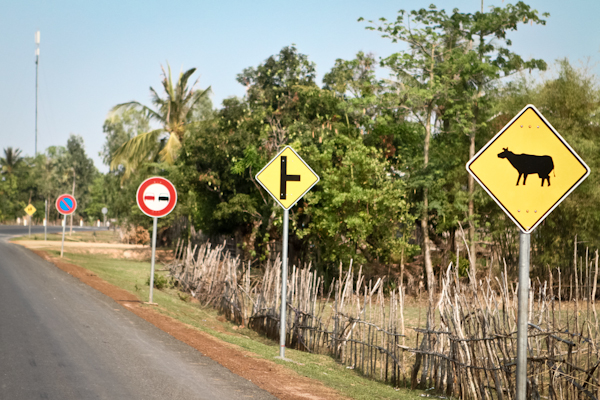
road signs

road signs

villagers

villagers

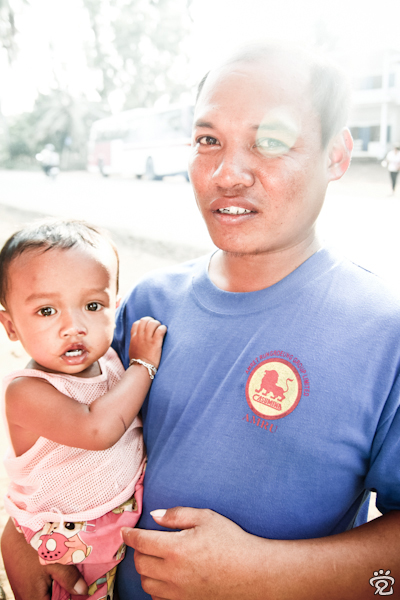
Khmer father and child

Khmer father and child

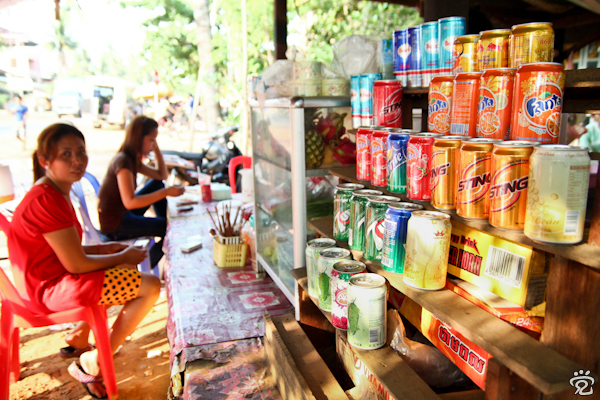
food stall

food stall

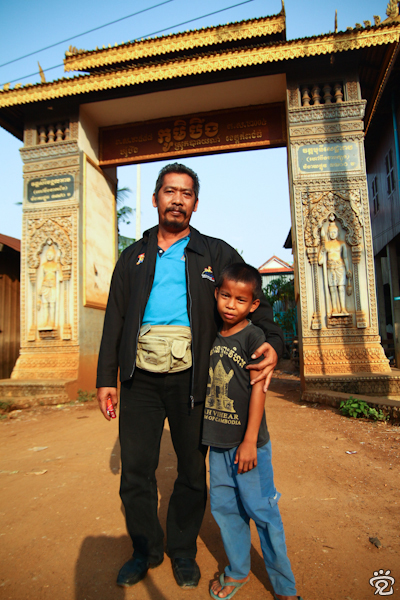
my friend, Zam (left) and a Khmer boy

my friend, Zam (left) and a Khmer boy

on hammock

on hammock

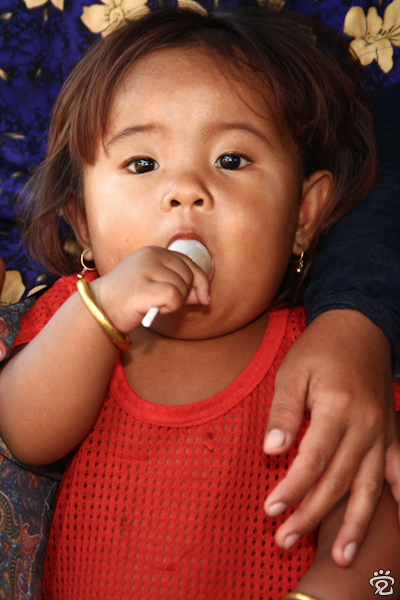
lollipop, melt in mouth

lollipop, melt in mouth

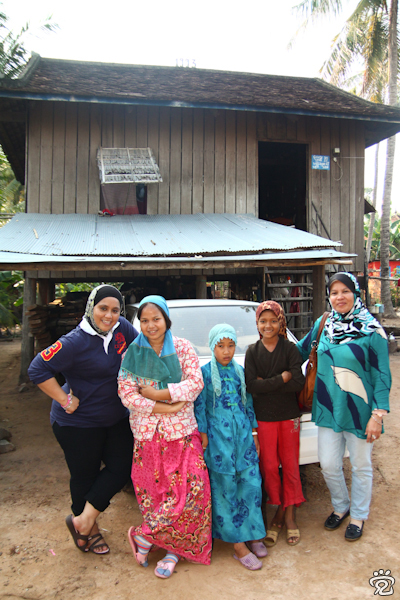
my friend, Amy (left) and the villagers

my friend, Amy (left) and the villagers

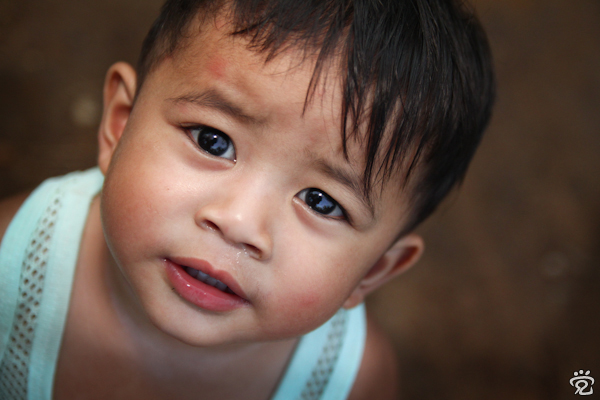
adorable Khmer kid

adorable Khmer kid

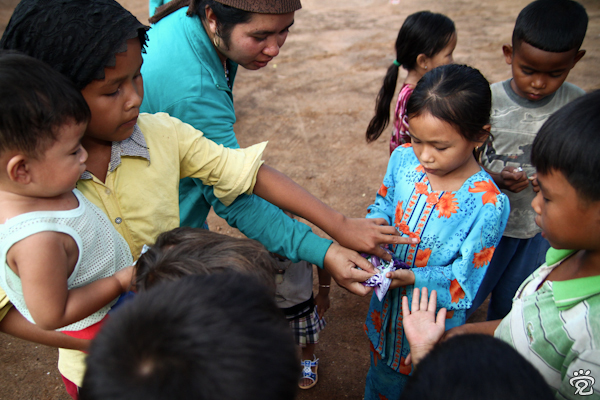
sharing the candy

sharing the candy

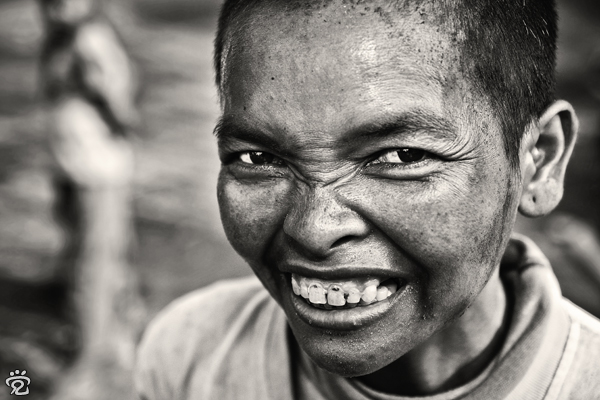
smile?

smile?

Greenpeace celebrates Thai GE-free Rice Strategy on Farmers’ Day

By Rambling
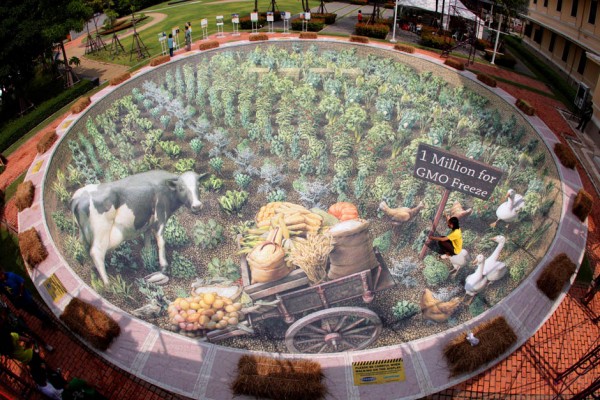
Handout picture taken on June 2, 2011 shows a Greenpeace activist posing for a photo on a 3D artwork representing an organic farm, at the Museum of Siam in Bangkok. Thailand´s rice masterplan recently outlined a policy aimed at keeping Thai rice free of genetically-modified organisms (GMOs).  (image from Athit Perawongmetha/AFP/Getty Images)

Handout picture taken on June 2, 2011 shows a Greenpeace activist posing for a photo on a 3D artwork representing an organic farm, at the Museum of Siam in Bangkok. Thailand´s rice masterplan recently outlined a policy aimed at keeping Thai rice free of genetically-modified organisms (GMOs). (image from Athit Perawongmetha/AFP/Getty Images)

Greenpeace today celebrated Thailand’s Rice Masterplan for keeping Thai rice free of genetically-modified organisms (GMOs). The GE-free rice policy, a key strategy in the Thai Rice Masterplan, protects Thailand’s thousands-year old rice heritage from the inherent risks posed by genetically-engineered (GE) crops.

For the occasion, Greenpeace unveiled a gigantic eco-friendly 3D artwork of an organic farm, an illustration of healthy, ecological farming, at Museum of Siam, Bangkok.   The event comes ahead of the National Rice and Farmers Day on June 5th to celebrate the pride of Thai rice tradition and wisdom of Thai farmers who can produce safe food without the need of GE.

“The Thai government’s strategy to keep rice production GE-free is an acknowledgement embedded in government policy that genetically-engineered (GE) crops are unnecessary and a risk to a sustainable future for farming.  This is a victory for rice farmers and consumers because it affirms the commitment of the Ministry of Agriculture and Cooperatives to keep rice farming sustainable and rice crops free of environmental and health risks associated with GE crops,” said Natwipha Ewasakul, Sustainable Agriculture Campaigner for Greenpeace Southeast Asia.

“Greenpeace supports this strategy and we are happy to assist the government keep rice GE-free from now on.  We also welcome government commitment to keep this GE-free policy beyond 2011,” she added.

The current Thai Rice Masterplan conceived by the MoAC covers the enforcement period of 2007-2011.  The plan committed to strengthening the nation’s rice production while promoting farmers’ livelihoods and consumer confidence.  Keeping Thai rice GMO-free means that Thailand maintains its global leadership in rice production.

Greenpeace maintains that GMOs  threaten the future and biodiversity of rice in Thailand, and will make farming, and farmers, dependent on agricultural inputs exclusively owned by giant multinational corporations who control GMO technologies.

The huge 3D artwork presented by Greenpeace today during the festivities stands for the millions people around the world who aspire for a sustainable and secure future of food.  It was first launched in December 2010 front of the European Commission in Brussels, to accompany a signature petition by 1 million people clamouring for GE-free farming.  The petition, organized together with Avaaz [1] is an unprecedented EU-wide citizens’ initiative aimed at the European Commission calling for safe food and stopping genetically modified crops in the EU. The artwork is an ecological farm symbolizing the future of agriculture with no GMO crops, surrounded by the 1 million names.

“The policy asserts how the need for agriculture that is good for the planet and people is important to our country and our economy.  But it’s not just Thailand who stands to benefit from such a bold move.  Consumers around the world know that they can trust Thai rice. These 1 million people know that GMO crops are bad for food and farming and this demand is shared by people in Thailand,” said Natwipha.

Greenpeace and the Thai Farmer’s Network also organized a Thai rice exhibition which traces the history and tradition of Thai rice, Thai rice varieties and the profound relationship between Thai people and their staple diet. The exhibition also highlights the threats and dangers of GMOs.

The 3D art work and the Thai farmer network’s exhibit will be open to the public from 2 to 5 June 2011. Meanwhile, Greenpeace’s exhibition on Thai Rice and GE-free farming will be open from 2 to 30 June at Museum of Siam, 10.00 am – 6.00 pm (daily, except Mondays).

Greenpeace is an independent global campaigning organisation that acts to change attitudes and behaviour, to protect and conserve the environment and to promote peace.

[source: http://www.greenpeace.org/seasia/Press-Centre/Press-Releases/Thai-GE-free-Rice/]